

FCC certification is mandatory in the United States for electromagnetic compatibility and radio frequency compliance. Wireless products generally require the FCC ID equipment authorization route, commonly known as FCC ID certification.
1. Certification Overview
FCC certification is mandatory in the United States for electromagnetic compatibility and radio frequency compliance. Wireless products generally require the FCC ID equipment authorization route, commonly known as FCC ID certification.
2. Certification Mark

3. Product Scope
Wireless products, including Bluetooth devices, tablets, wireless keyboards and mice, wireless readers/writers and transceivers, 2G, 3G and 3.5G phones, DECT phones (1.8 GHz and 1.9 GHz bands), and wireless two-way radios
4. Certification Standards
|
Product |
Wireless Standards |
|
Wireless Products |
FCC PART 15C/15E FCC PART 22/24/2 |
5. Test Items
1. Conducted Disturbances
2. Radiated Disturbances
3. Maximum Output Power
Limit: ≤21 dBm or 30 dBm
4. 20 dB Bandwidth
Limit: None
5. Channel Spacing
Limit: >25 kHz or >two-thirds of the 20 dB bandwidth
6. Number of Hopping Channels
Limit: ≥15 channels
7. Dwell Time
Limit: <0.4 s
8. Band Edges
9. Antenna Requirements
6. Required Documents
1. Form 731
2. FCC ID Number
3. FCC Authorization and Confidentiality Letters
4. Block Diagram and Circuit Diagram
5. Operational Description
6. User Manual and Technical Specifications
7. Product Nameplate and Other Documents
7. Sample Requirements
1. One fixed-frequency RF test sample and one standard sample.
2. Fixed-frequency samples are required for multichannel products. For single-channel products, provide a continuously transmitting sample.
8. Certification Process
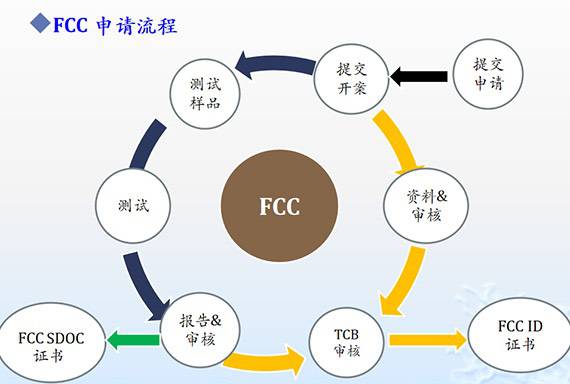
|
US FCC ID Certification |
|
· Testing Content: Wireless |

